
LIS and HIS integration
LIS and HIS integration for clinical data exchange, faster laboratory workflows, and safer interoperability
Connect laboratory and hospital systems so orders, statuses, and results move with less manual handling and better operational continuity
MPED helps healthcare organisations improve laboratory-to-hospital interoperability by designing integration layers that support mixed system environments, reduce manual transfer work, and create a more reliable operational path for clinical data exchange.
Typical fit: Diagnostic laboratories, healthcare providers, and digital health operators that need dependable order and result movement between LIS and HIS environments.
Based on a real clinical interoperability implementation
Designed for mixed-provider healthcare environments and secure operational use
Focused on order flow, result delivery, visibility, and continuity across systems

Typical outcome
Less manual laboratory data handling, faster result movement, stronger clinical visibility, and a better interoperability foundation.
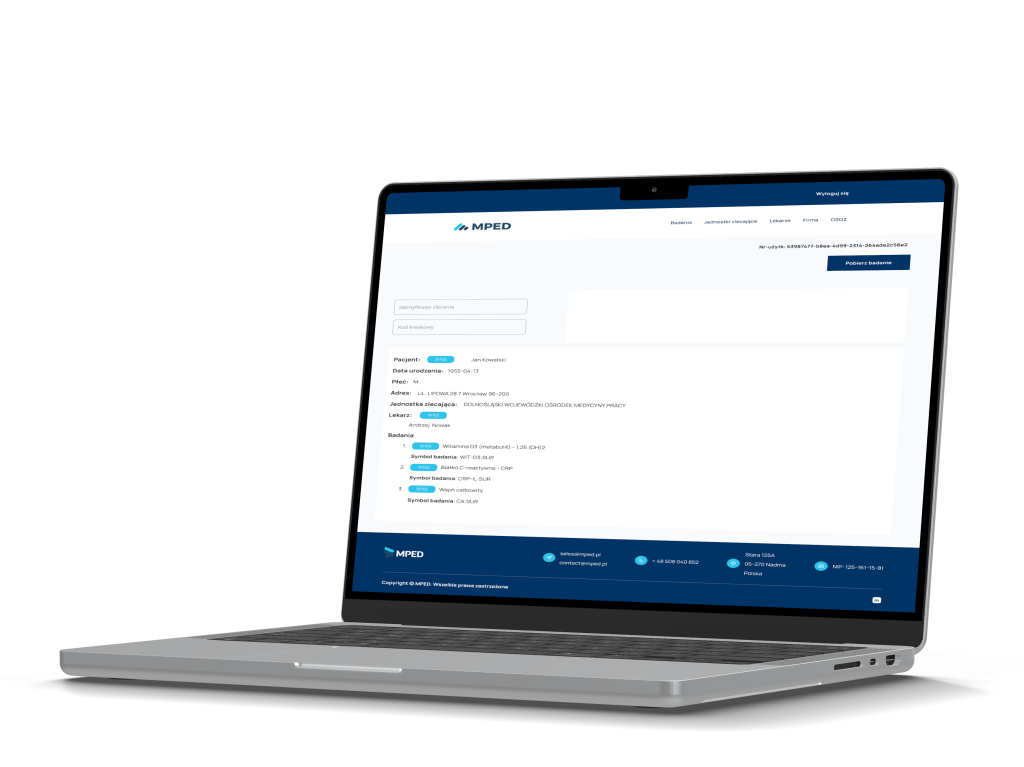
The problem
Where clinical data exchange breaks down between laboratory and hospital systems
Many healthcare organisations still depend on fragmented LIS and HIS environments where laboratory orders, statuses, and test results move slowly, inconsistently, or with too much manual handling in the middle.
Manual transfer of laboratory information
Orders and results are too often re-entered, checked manually, or moved through inconsistent workflows between diagnostic and clinical systems.
Delays in downstream clinical workflows
When result movement is slow or unreliable, the impact appears later in patient-flow, clinical visibility, and coordination between teams.
Transcription and handling risk
Repeated manual intervention creates more opportunity for data-quality issues in workflows where operational reliability matters.
Weak interoperability across mixed environments
Healthcare providers often need continuity across multiple systems, vendors, and site-specific constraints rather than one clean point-to-point integration.
Why it matters
Why LIS-HIS interoperability is an operational issue, not just an interface task
Clinical data exchange affects laboratory throughput, staff workload, result visibility, and confidence that the right information reaches the right system in time for downstream care processes.
Clinical throughput and continuity
Faster, more reliable order and result movement supports smoother coordination between diagnostic and clinical teams.
Lower administrative burden
Reducing manual transfer work gives laboratory and medical staff more time for operational priorities that should not be lost to system friction.
Safer handling of sensitive data
Healthcare workflows need secure, controlled exchange rather than improvised operational workarounds between platforms.
Scalable interoperability across real system landscapes
A stronger integration model helps organisations support growth, provider diversity, and future system changes without rebuilding the whole data path each time.
How we approach it
A governed interoperability layer rather than a brittle one-off connection
MPED treats LIS-HIS integration as a workflow and interoperability problem. The goal is to move orders, statuses, and results reliably through mixed healthcare environments while keeping transmission, transformation, and monitoring controlled.
Integration layer between diagnostic and clinical systems
A dedicated interoperability layer can coordinate order and result movement without forcing every system to behave as a direct mirror of another.
Support for mixed providers and standards
The delivery can adapt to healthcare software diversity, using the standards and transport methods that fit the real environment rather than an idealised one.
Secure handling of result and status data
Transmission and transformation logic can be shaped around the sensitivity of medical data and the operational requirements of live healthcare workflows.
Operational monitoring and continuity
The workflow should make it easier to understand what moved, what failed, and where follow-up is needed when clinical teams depend on timely results.
What you get
Practical output for laboratory-to-hospital data exchange
The end result is not only an interface between two systems. It is a more dependable operational path for orders, statuses, and results moving between diagnostic and clinical workflows.
Automated laboratory-order transfer
Orders can move from HIS workflows into LIS processing with less manual intervention between teams and systems.
Automatic result delivery back into the clinical workflow
Validated results can be routed back into the right hospital or patient-record context more reliably than manual handoff methods.
Bidirectional status visibility
Statuses and result availability can be shared across systems so downstream teams have better visibility over the workflow state.
A stronger interoperability foundation
The organisation gains a more supportable path for current exchange needs and future healthcare integration work across multiple systems.
Outcomes
Representative outcomes from a comparable interoperability delivery
The outcomes below reflect the kind of improvement this LIS-HIS integration model is intended to create when healthcare teams move away from fragmented laboratory data handoff.
Faster order and result movement
Laboratory and hospital systems exchange information with less delay, which supports smoother downstream clinical workflows.
Reduced manual data handling
Administrative effort drops when orders and results do not need repeated manual movement between systems or teams.
Lower risk of transcription-related issues
Reducing manual touchpoints improves the reliability of the data path across sensitive clinical and diagnostic workflows.
Better foundation for secure healthcare interoperability
The delivery creates a more supportable, more scalable route for data exchange across mixed healthcare software environments.
Proof
Representative project snapshot
This page is grounded in a real implementation where laboratory and hospital systems needed a more dependable path for orders, statuses, and result exchange across a fragmented healthcare environment.
- Connected laboratory and hospital workflows through a dedicated interoperability layer
- Supported automated transfer of orders, statuses, and validated test results
- Reduced manual handling and improved visibility across diagnostic and clinical teams
- Focused on secure, supportable exchange across mixed healthcare software environments
Next step
Use the case study as proof and assess the integration path around your own clinical workflow
The most useful next step is usually a practical review of the current LIS-HIS landscape, the order and result path that matters most, and the validation or rollout controls needed to improve interoperability safely.
FAQ
Common questions before implementation starts
These are the questions buyers usually raise while they are deciding whether the problem, scope, and delivery model fit their organisation.
Can this work across mixed LIS and HIS providers?
Yes. The delivery model is designed for real healthcare environments where systems, vendors, and integration standards can vary rather than assuming one uniform platform stack.
What kind of workflow is usually included in scope?
A practical scope usually covers laboratory-order intake, status exchange, result delivery, notifications, exception handling, and the secure data-transfer rules needed for reliable clinical operations.
Do you only support HL7-based integrations?
No. HL7 is often relevant, but the right implementation can combine HL7 and API-based patterns depending on the actual system landscape and operational constraints.
How do you reduce risk during rollout?
Rollout should be phased around the live workflow, existing providers, and the operational risk of result movement so teams can validate continuity before wider expansion.
Why is an integration layer better than a narrow point-to-point link?
An integration layer gives the healthcare organisation one place to control validation, transformation, routing, and monitoring instead of multiplying brittle system-specific connections over time.
Related resources
Topics buyers usually review next
These are the adjacent planning questions and follow-on topics that usually shape the next conversation, even when the full content cluster has not been published yet.
Interoperability standards and integration boundaries
Buyers usually need to decide which standards, message types, and validation boundaries belong inside the integration layer before implementation starts.
Phased rollout across live healthcare workflows
The practical challenge is often not whether systems can connect but how to introduce the workflow safely without disrupting live result delivery and downstream care operations.
Technical appendix
Implementation notes that usually matter in clinical data-exchange work
This pattern usually depends on secure transport, explicit message handling, and support for mixed-provider environments rather than a one-size-fits-all integration shortcut.
HL7 and API-based exchange patterns
Healthcare interoperability often needs a combination of established messaging standards and more modern API patterns depending on the system landscape.
Secure transport and controlled transmission
Sensitive laboratory and patient-related data needs explicit handling around encryption, routing, and operational trust in the exchange layer.
Bidirectional workflow support
Laboratory orders, statuses, and results need to move through clearly defined inbound and outbound paths rather than isolated one-way pushes.
Adaptation to mixed healthcare software providers
The delivery model must accommodate varied system behavior and local constraints if it is meant to work across real clinical environments.